
When two icons meet, you don't add — you distill.
Diet Coke has always been more about identity than product, with decades of connection to the fashion world. The Devil Wears Prada is a film that stayed in the minds of an entire generation and is still there, alive, referenced in exactly the tone it was made. Bringing these two brands together didn't require invention — it required reading. We opened many paths, explored directions, tested layers. And it was through that process that we understood the right move was the opposite: to remove. To find where the two already touched and let that come through.
When two icons meet, you don't add — you distill.
Diet Coke has always been more about identity than product, with decades of connection to the fashion world. The Devil Wears Prada is a film that stayed in the minds of an entire generation and is still there, alive, referenced in exactly the tone it was made. Bringing these two brands together didn't require invention — it required reading. We opened many paths, explored directions, tested layers. And it was through that process that we understood the right move was the opposite: to remove. To find where the two already touched and let that come through.
The same logic guided the verbal identity. The concept we called Sparkling Irony wasn't built on top of the film — it was found in the convergence between the film and the brand. Diet Coke's platform is already about strong personality, about choosing what you want without asking permission. Miranda's attitude isn't an external reference to that territory — it inhabits the same place.
From there, the choice was to draw from the iconic lines of characters that defined a generation and translate them into the brand's own register. From more than ten phrases developed, two made it to the final product. "Everybody wants this" and "My taste, that's all." The second carries the project's synthesis in a single line: "my taste" is the brand's platform, "that's all" is Miranda. One line that belongs to both universes at the same time.
The same logic guided the verbal identity. The concept we called Sparkling Irony wasn't built on top of the film — it was found in the convergence between the film and the brand. Diet Coke's platform is already about strong personality, about choosing what you want without asking permission. Miranda's attitude isn't an external reference to that territory — it inhabits the same place.
From there, the choice was to draw from the iconic lines of characters that defined a generation and translate them into the brand's own register. From more than ten phrases developed, two made it to the final product. "Everybody wants this" and "My taste, that's all." The second carries the project's synthesis in a single line: "my taste" is the brand's platform, "that's all" is Miranda. One line that belongs to both universes at the same time.
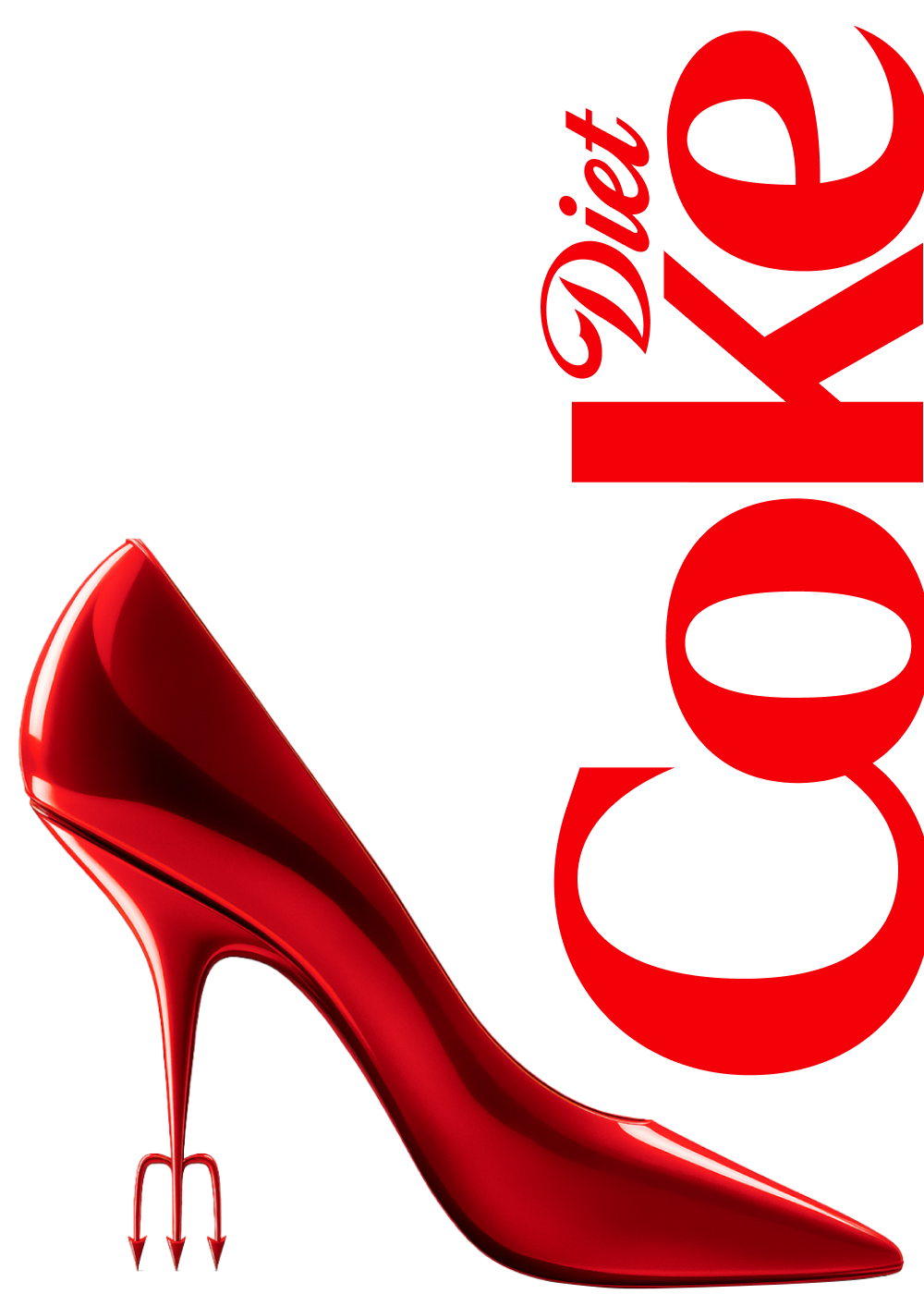
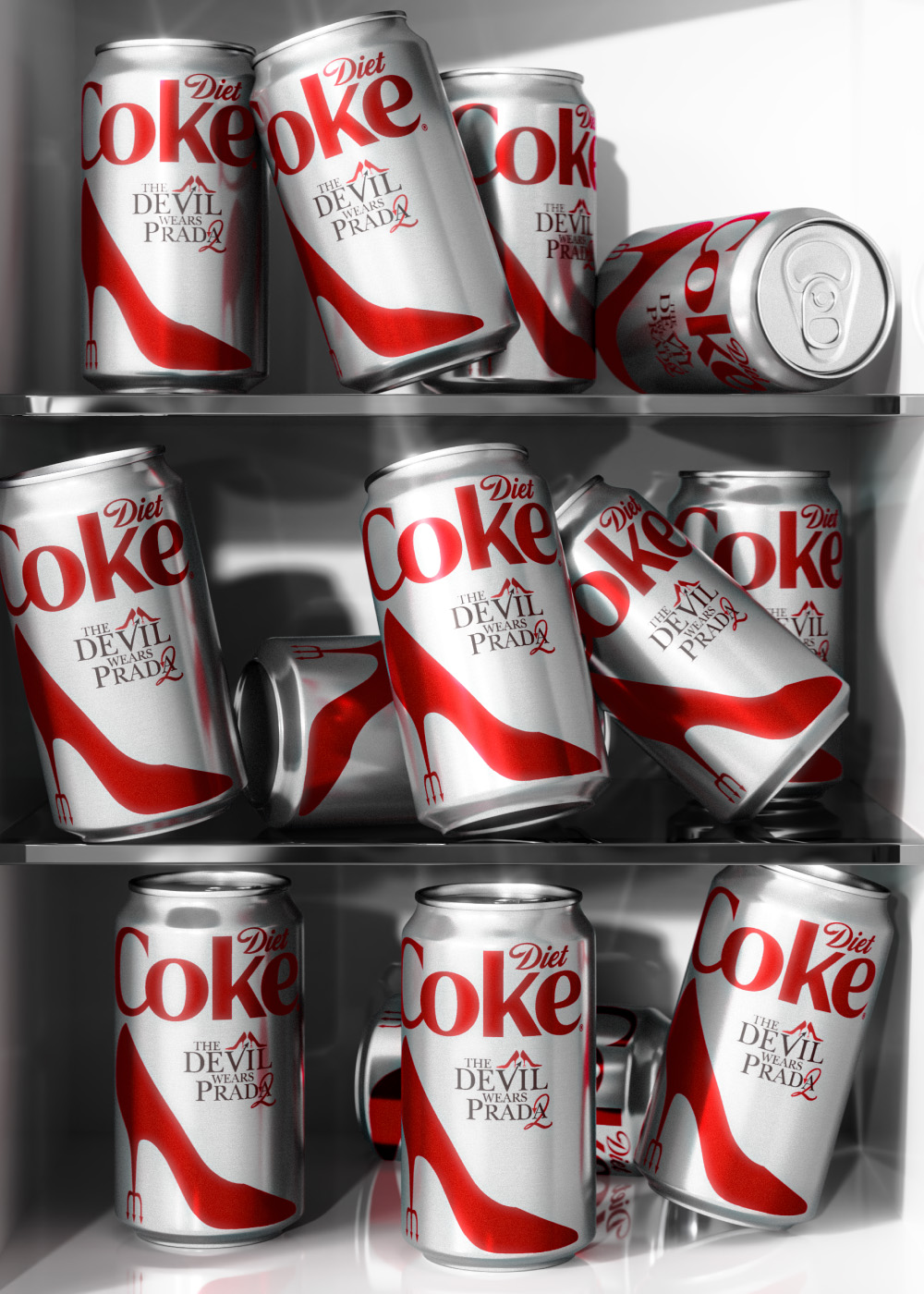
After exploring fashion editorials, illustrations and dozens of directions, the answer was in the most precise element: the red stiletto with a devil's trident for a heel. The shoe that's on the poster, in the logo, in the memory of everyone who saw the film. Red — the same red as the can. The same minimalist aesthetic both brands share, white and black with an accent of color that doesn't need to explain itself. The can was stripped clean. The shoe at the center. That minimal expression had enough force and flexibility to unfold across seven markets, from point of sale to cinema.
After exploring fashion editorials, illustrations and dozens of directions, the answer was in the most precise element: the red stiletto with a devil's trident for a heel. The shoe that's on the poster, in the logo, in the memory of everyone who saw the film. Red — the same red as the can. The same minimalist aesthetic both brands share, white and black with an accent of color that doesn't need to explain itself. The can was stripped clean. The shoe at the center. That minimal expression had enough force and flexibility to unfold across seven markets, from point of sale to cinema.