
ENTRUMPIA:society’s autoimmune collapse and nature’s regenerative potential
ENTRUMPY:
The autoimmune collapse of society and the regenerative potential of nature
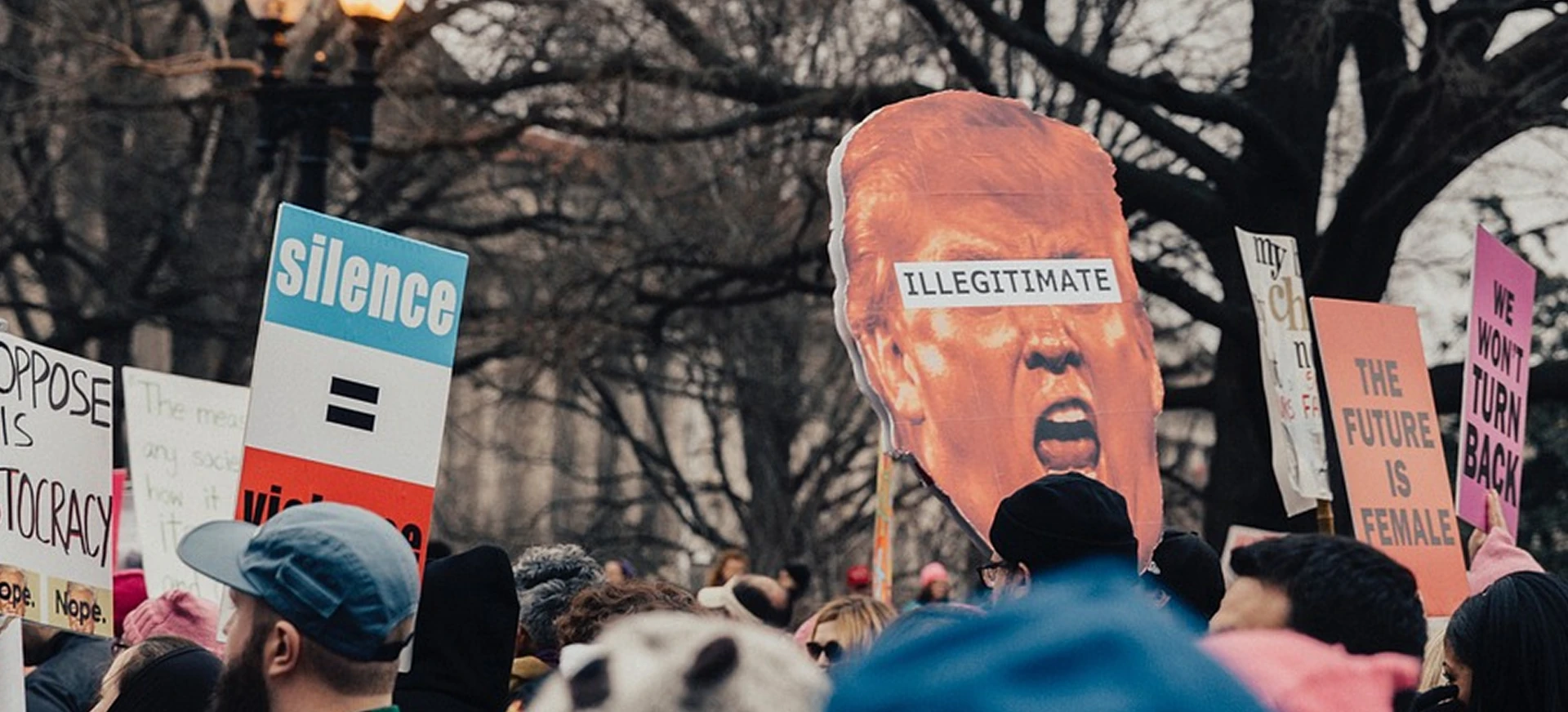
Donald Trump’s return to power is not just a political event. It is a visible symptom of a deeper process — the advance of “enTRUMPia,” a wave of chaos that seems irresistible. Radical polarization, expanding wars, nuclear risk, climatic collapse. The world is reorganizing around fractures rather than bridges. If entropy is the natural tendency of any closed system toward collapse, then Trump acts as a catalyst. An agent accelerating disorder, destabilizing institutions, corroding the fabric of social trust, and normalizing the absurd. But is he the cause or merely the reflection of a larger process? Perhaps Trump is not the virus, but the symptom of a global autoimmune disease.
In a healthy organism, the immune system protects against external threats. Yet when it fails to recognize its own cells, an autoimmune disease is born. Today’s society suffers from the same malady: we have lost the ability to recognize the “other” as part of the same body. There are no longer adversaries — only existential enemies. Dissent becomes heresy. Social networks function as dysregulated superantibodies, attacking any divergent thought, while dialogue — the delicate fabric that sustains coexistence — crumbles at every corner, in every family, in every digital bubble. The “internal enemy” is now an idea, a vote, a belief. The result? A social organism in a state of chronic inflammation, fighting itself, while real threats — climatic, geopolitical, economic — advance without coordinated resistance.
If we understand the planet as a vast organism, as suggested by James Lovelock’s Gaia hypothesis, we face a systemic collapse that seems to culminate in the dystopian science fiction of streaming platforms. Yet, entropy in nature is not necessarily synonymous with extinction. It is often the fertile ground for transformation. Collapse makes room for the new. Biomimetics teaches us that some seeds only germinate after a fire; extreme heat shatters dormancy, allowing regeneration. What in our society lies dormant, waiting for the shock of chaos to awaken? The underground networks of fungi and roots remind us that beneath the soil exists another world — invisible but essential — a fabric of collaboration and interdependence. And ant colonies show that intelligence need not be centralized; it can emerge from the collective, from the sum of small actions.
Perhaps what can save us is not at the center of the system, but on its fringes — in those hybrid territories where different forms of life and thought meet and intermingle. In nature, the margins are zones of high biodiversity, where life is richer and more resilient — the meeting point of land and sea, forest and field, river and its banks. The social equivalent of these margins are the spaces where cultures intersect, where disciplines dialogue, where dissent generates creative friction rather than destructive conflict.
Consider grassroots movements, collaborative economies, and solidarity networks that emerge in times of crisis. They are like pioneer species, preparing the ground for others to flourish. Participatory budgeting in some cities, for example, is a form of decentralization inspired by ecosystems, where decision-making power circulates, creating resilience. The same is true for restorative justice initiatives, which aim to heal social wounds through dialogue rather than punishment.
Perhaps the most important lesson of biomimetics for this moment is recognizing that we are not outside of nature — we are nature. If it collapses, we collapse with it. In that sense, the ancestral cosmologies of indigenous peoples, especially Native Americans, have much to teach us. For them, there is no separation between what is culture and what is nature. The mountain, the river, the wind, the sun, and the moon are kin, just as the objects and technologies they create are also part of nature. For the Yanomami, for instance, the bow and arrow are not merely hunting tools; they carry a spirit and are part of a symbiotic relationship with the forest. The bow represents the extension of the hunter’s strength and intention, while the arrow, in flight, carries not only the energy of the human but also that of the environment sustaining it.
In the tradition of Arctic peoples, such as the Inuit, ice houses are more than shelters. They are seen as temporary organisms, breathing with the climate and the rhythm of the community. The igloo is built from the environment itself, using compacted snow, and then disintegrates back into the ecosystem when no longer needed, leaving no trace. It is part of the natural cycle — not something separate from it. The relationship with the world is not one of ownership, but of belonging. Time is not a straight line toward progress, but a cycle of constant renewal. It is not about romanticizing the past, but remembering that there have been — and still are — ways of life not based on the illusion of separation, ways in which peoples understood long before any scientific theory that true strength lies in interdependence.
Similarly, perhaps we should recognize that artificial intelligences and other exponential technologies are extensions of the same vital process that created us, and we might see them (and evaluate them) not solely as threatening tools but as inherent parts of the complex solutions to the unprecedented challenges we face. Everything is part of the problem. Everything is part of the solution. What will make the difference is our ability, even in the midst of chaos, to take a deep breath and catalyze the strength of the collective — for it is from there that our success as a species will arise. After all, the creative force of evolution has never been about separation, but about connection.
If “enTRUMPia” is the perfect storm, then the antidote lies at the margins, in those transitional spaces where new forms of life can emerge. Chaos is not the end — it is the ground in which forgotten seeds finally find the conditions to germinate.
Nature does not fight collapse. It endures, learns from it, and reinvents itself. Perhaps that is inevitably what we must do.

.jpg)