Communication, Marketing, and Brand Team
Pure restlessness generates nothing new. It reproduces and accelerates what already exists.
Byung-Chul Han
Welcome to the March edition of our newsletter!
Each month we meet here to share the themes that have crossed our creative journey and are echoing out into the world. In this edition, you'll find stories on the death of the trend reports, AI's growing presence in Hollywood, YouTube's rebrand, the shutdown of Sora, and what consumers actually think about brands and sustainability.
In the section Tátil around the World, we present Natura Homem’s Personal Care case study, go deeper into the Trillia case — covering our end-to-end delivery and the creative coding platform — and share Fred Gelli's new audio-article for Fast Company Brasil on the value of difference.
Our goal is to stay true to our core principle of working WITH, not FOR. Feel free to share your suggestions, comment on our content, or interact with us by replying to this email.
Enjoy your reading!
Communication, Marketing, and Brand Team
Top 5 Tátil Curations
The burial of trend reports
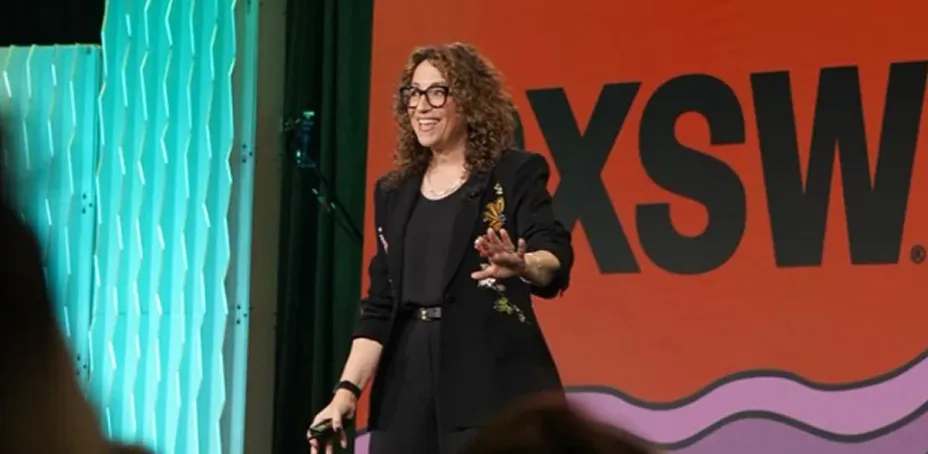
At this year's SXSW, futurist Amy Webb walked on stage dressed in black, surrounded by flower wreaths and a farewell playlist, to announce the end of her own annual trends report — published for 19 years. The argument: a static PDF, however robust, is already obsolete in a world that changes faster than any editorial cycle can keep up with. In its place, she proposes working with convergences — intersections of forces, uncertainties and systemic movements that form more resilient patterns than any single trend. And we were there to see it live. Pedro Medicis (Tátil's president) was in Austin and recommends this presentation both for the argument and for the staging, which is worth watching on its own.

The camera doesn't lie. The prompt might.
Oscar season brought AI back to the center of Hollywood's conversation — not as a future threat, but as a present fact. A 15-second clip of Tom Cruise and Brad Pitt generated by ByteDance's Seedance 2.0 went viral in February, realistic enough to draw cease-and-desist letters from Disney and SAG-AFTRA. The Wizard of Oz, enhanced with AI outpainting, sold 2 million tickets at the Sphere in Las Vegas. And 41,000 film and television jobs have disappeared in Los Angeles County in three years. Holly Willis, professor of Cinematic Arts at USC, resists the obvious conclusion: she points to filmmakers who use AI to eliminate the tedious work, not the creative practice. The industry has survived sound, videotape and streaming. What doesn't change is the need for stories told with intention.

Staying alive at 20
YouTube turns 20 this year, and its new global identity (built entirely in-house) raises a question worth sitting with: what does it mean to rebrand something that has already become infrastructure? The answer the team landed on was deceptively simple: Alive. Rather than reinventing the platform's visual language, the refresh re-energizes what already exists — the red, white and black palette, the play bar, the cultural shorthand of "like, subscribe, share" — giving familiar assets greater range without erasing two decades of equity. A custom typeface in nine global scripts, a new illustration system and a first-ever formal motion identity complete a framework designed to move with culture, not ahead of it. The most demanding brief isn't reinvention, it's staying coherent while everything around you keeps changing.
Don't build on borrowed sand
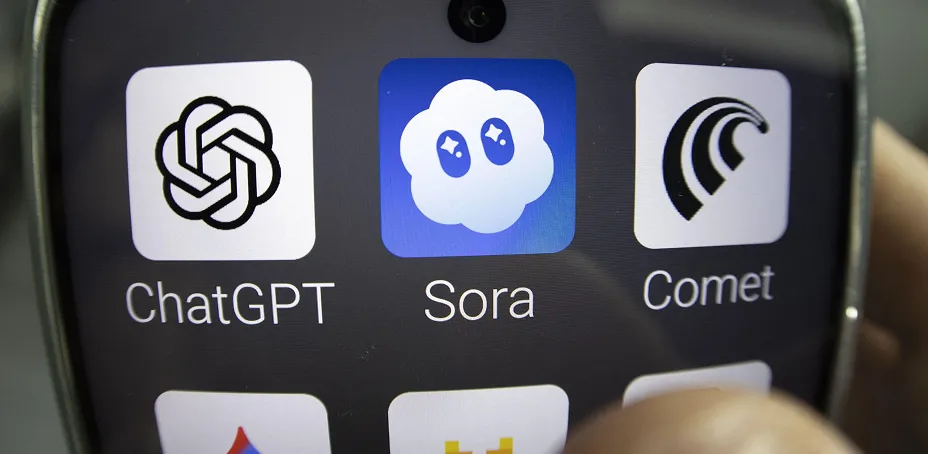
OpenAI shut down Sora with a farewell post on X and less than 24 hours' notice. No wind-down period. A $1 billion content partnership with Disney covering (Marvel, Pixar and Star Wars characters) gone overnight. The reason was mundanely financial: with an IPO approaching, computing costs didn't justify revenue. Creatives who had built real workflows around the platform were collateral damage. Tom May's piece in Creative Boom states the lesson plainly: there's a meaningful difference between using AI as one component in a process you own, and restructuring your entire practice around a platform you have no stake in. The tools are useful. But the ones that arrive loudly tend to vanish quietly.

Less noise, more proof
Kantar's 2026 Sustainability Sector Index — covering 12 countries and 42 sectors — lands a finding that should reframe how brands approach the subject: only 15% of consumers globally say they know a lot about what brands are actually doing on sustainability. The problem isn't apathy. It's that people are overwhelmed, not disengaged, and have grown deeply skeptical of claims they can't feel. The report's central argument is blunt: brands need to stop asking people to care more and start making action easy. Sustainability perceptions alone contribute up to 10% of brand value in the Kantar BrandZ global top 100, but only when they're grounded in sector context, human understanding and visible proof. Silence, the report warns, will be read as inaction.
Tátil around the world

Natura Homem’s Personal Care
Evolving a brand’s visual language takes a careful balance between heritage and innovation. For Natura Homem’s Personal Care, we elevated the positioning and narrative under the concept “(Self-)Care is Powerful”. We created an asset ecosystem that translates high performance and the exclusive DermoTech® technology, designed for the rhythm of the contemporary man who wants maximum results in minimum time. From there, a precise, geometric, and hypersensory visual language emerges—bringing self-care into the routine in a dynamic and efficient way.

Trillia
Building a new business is only half the work. The other half is making sure it reaches the world with the same clarity it was conceived with. With Trillia, we led the go-to-market with the same team that built the strategy, naming and visual language — which means the concept didn't get lost in the transition between creating and communicating. We developed the launch campaign concept, the film that brought it to life, and the assets that guided the agencies' rollout, along with the full spatial design for launch day.But the project went beyond the launch. To ensure cohesion and scale in everyday execution, we developed a creative proogramming platform that translates the business rules into a programmable system: overlapping grids, layered color fields and Trillia's symbol as a generative module — stars that interlock, combine and produce compositions within defined parameters. Animations emerge organically from these compositions, as if the data itself were in motion. Instead of recreating graphics for every new piece, the system generates its own combinations, ensuring the business operates with the same visual intelligence with which it was created.
[Article] Fred Gelli
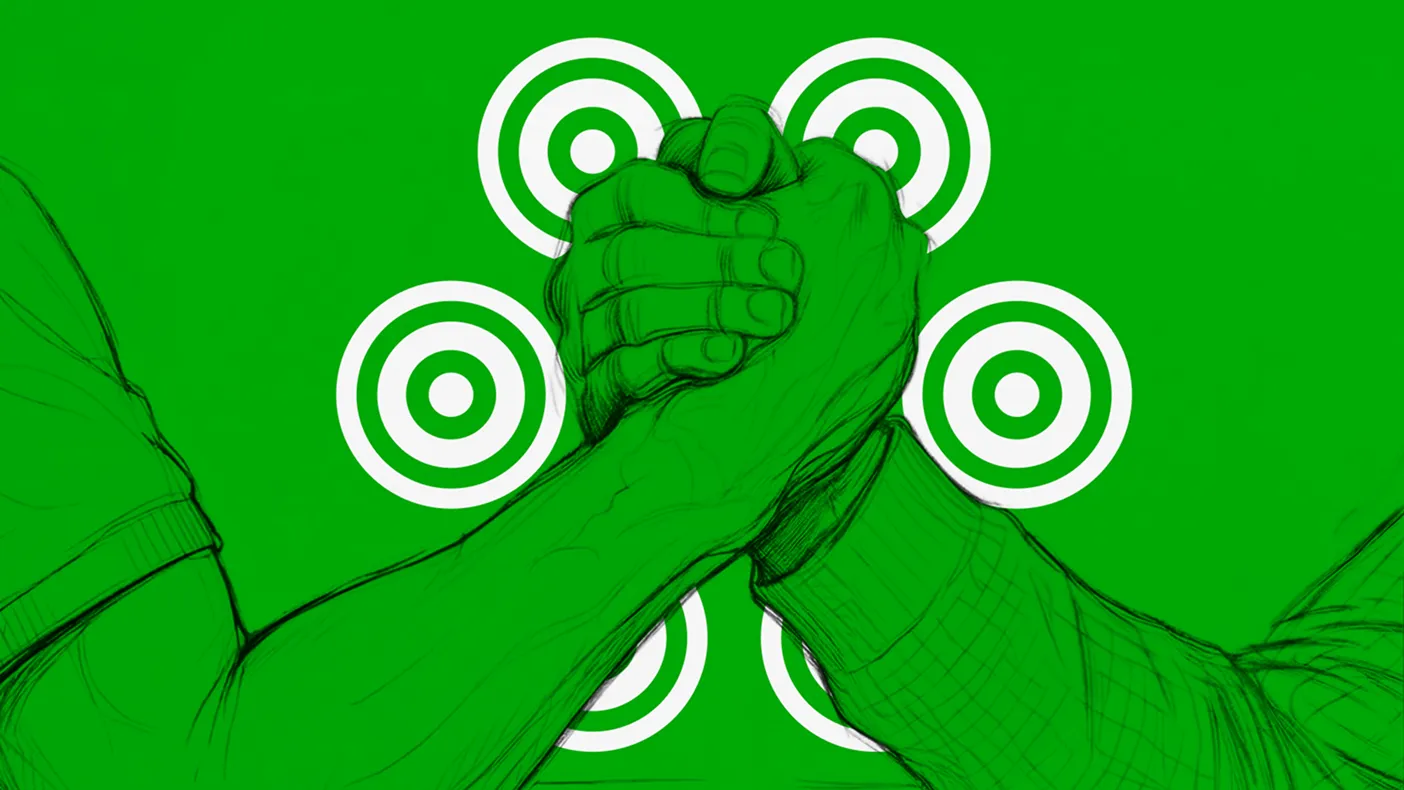
"The brilliance of the new emerges when different people find space to cooperate." In his latest article for Fast Company Brazil, Fred Gelli (CEO) opens with a familiar scene that reveals one of the deepest tensions of our time: what happens when divergence stops generating exchange and simply widens the distance between us.