
The gesture, the prompt, and the nostalgia for what makes us human
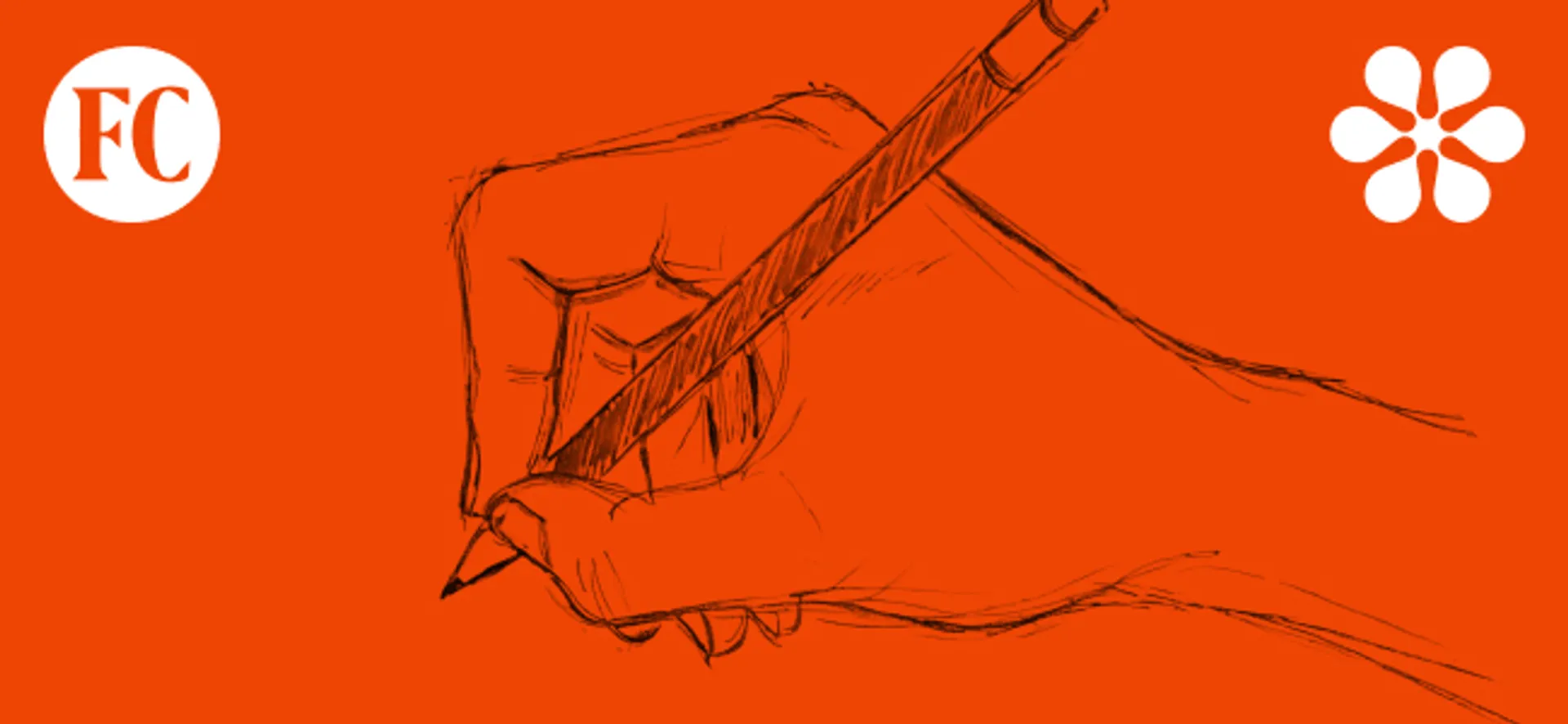
Recently, Hermès, one of the most consistent and prestigious luxury brands in the world, made a smart move. On its website and social media, hand-drawn drawings began to appear: imperfect strokes, visible brushstrokes, almost simplistic animations. There was the evidence that a person was behind it. The brand invited around 50 artists from around the world — illustrators, painters, musicians — to translate, in an absolutely personal way, their relationship with the brand’s values. The briefing was open, and the result was deeply human. And this move went viral.
What went viral was not just an aesthetic choice. It was a provocation.
In a world saturated with technically flawless images—generated, refined, and optimized by artificial intelligence, where the fantastic has become vulgarized—that communication seemed to say: here, hand, time, error, gesture, and pulse still exist. Here, there is no algorithmic mediation between intention and result.
Something very similar happens in music. The continuous success of Tiny Desk Concerts reveals a clear desire for less mediated experiences. Exposed voice. Minimal arrangements. Possible error. Artists sitting close, without a spectacle. What mobilizes there is not the superproduction, but the feeling that there is someone on the other side. A body. A real time. An energy that cannot be simulated.
This return of craft, of the handmade, is not a rejection of technology. It is a response to an imbalance. I have the feeling that we are beginning to live through an anticipated nostalgia — a nostalgia for what still exists scattered around, but which we sense is at risk. A nostalgia for what makes us human.
In my last article, I spoke about sensoriality. About how our relationship with reality passes through the body, through physicality, through the multisensory experience of the world. Not just seeing, but touching, hearing, smelling, feeling weight, texture, friction.
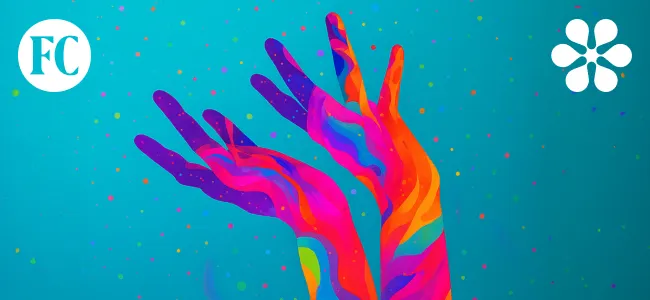
A hand-drawn drawing does not just communicate an image. It carries the time of the body, the pressure of the gesture, the hesitation, the decision. There is a natural intelligence manifesting there. A type of cognition born from the encounter between desire and impulse. Message and form, pure expression in flesh and blood.
Artistic expression as the foundation of humanity
This perception is not romantic. It is structural.
Neuroscience and anthropology studies from some of the most renowned universities in the world point out that art is not an adornment of civilization; it is one of its most important invisible infrastructures.
Art is, historically, a liberating instance. It teaches us to deal with ambiguity, with the improbable, with what escapes linear logic: art trains us for life. It makes us, in fact, human. What could the synthetic production of content mean in the medium term?
Perhaps we are talking about a transformation of an unprecedented scale. Not like when photography appeared, nor like when cinema was born. We are talking about tools that do not just record or amplify, but intervene directly in the creative process.
Therefore, nostalgia makes sense. Not as an escape, but as an alert.
The algorithms that organize platforms and train artificial intelligence operate from a clear logic: engagement. What keeps people connected longer is worth more. And, most of the time, what engages is the recognizable. What has already worked. The average taste. In a context of hyper-productivity, in which everyone produces more and faster with the support of AI, the system enters a vicious cycle. Copy of a copy of a copy. Less diversity. Less accident. Less deviation.
Some data help to dimension this scale. Recent estimates indicate that around a quarter of the content consumed today on platforms like YouTube already involves some degree of generation by artificial intelligence, whether in the script, music, image, or editing.
The risk is not the technology itself. The risk is the flattening of repertoire. When everything responds to the same engagement criteria, when everything references what has already worked, we lose precisely the variables that make culture advance: deviation, the strange, what initially does not engage, but transforms. Or, as I’ve called it before, a creative instant noodles: fast, ultra-processed, momentarily satisfying, but doesn’t nourish. It doesn’t create memory. It doesn’t create a bond.
This is one of the cores of the crisis we are living. And perhaps one of the deepest reasons for this diffuse feeling of withdrawal. We are not just tired of screens. We are becoming starved of creative diversity.
The problem is that life doesn’t evolve like that. Life evolves by increasing diversity. Rich ecosystems are diverse ecosystems. The greater the diversity, the greater the resilience. Homogeneous ecosystems are fragile. What we are living today is something similar on a cultural level. A symbolic impoverishment that begins to be felt in the body and soul.
I just read a book that deeply impacted me and helps shape this intuition: “Ways of Being” by the writer and artist James Bridle. Bridle proposes a radical displacement of the idea of intelligence. For him, intelligence is not something one possesses, neither in the isolated individual nor in the machine, but something practiced in relation. It is not contained; it is in between: in the encounter, in the context, in the exchange, in shared time. And the contemporary problem, according to him, is not the emergence of artificial intelligence itself, but the fact that we have spent centuries unlearning how to recognize these other forms of intelligence. By reducing intelligence to what can be measured, predicted, and optimized, we moved away from relational intelligences — present in bodies, in the arts, in ecosystems, in unmediated interactions.
Perhaps part of the malaise we are beginning to feel comes exactly from there. We have entered a kind of relational withdrawal. We invest less and less in rituals that operate through sensitivity, not efficiency. We seek shortcuts of instant inspirations, of immediate responses, because we no longer have time to seek them where they actually are. Therefore, perhaps this “renaissance of craft,” as some are beginning to call what is emerging, is not just another trend. Perhaps it is a real symptom. It is the body asking for presence. It is culture trying to recover essential variables of its own evolutionary process.
So, let’s invest more in what our hands (still) can do, driven by our natural, multiple, sensitive intelligence, which is born from the true relationship with reality, with nature, with the people. More brush, less mouse. More brainstorming, less prompts. More truly creative rituals. More paper, less screens. It’s time to recover our appetite for the act of creating, without the crutches of AIs — at least in the moments of conception.
Because, in the end, it is by no means about rejecting technology. It’s about not letting what allows us to use it with awareness, imagination, and humanity atrophy. Because this is a real risk: not just losing technical capabilities, but losing perception. Losing the critical eye over what has value and what doesn’t, over what is true and what is false, over what is truly a product of human expression.
As James Bridle says, the risk is not machines becoming smarter. It is we who become less sensitive.
Heading 1
Heading 2
Heading 3
Heading 4
Heading 5
Heading 6
Lorem ipsum dolor sit amet, consectetur adipiscing elit, sed do eiusmod tempor incididunt ut labore et dolore magna aliqua. Ut enim ad minim veniam, quis nostrud exercitation ullamco laboris nisi ut aliquip ex ea commodo consequat. Duis aute irure dolor in reprehenderit in voluptate velit esse cillum dolore eu fugiat nulla pariatur.
Block quote
Ordered list
- Item 1
- Item 2
- Item 3
Unordered list
- Item A
- Item B
- Item C
Bold text
Emphasis
Superscript
Subscript
Text:
Fred Gelli
Communication & Mkt & Marca Tátil:
Luiza Magalhães, Marcelo Cândido e Bruno Cesar
Public Relations:
Flávia Nakamura