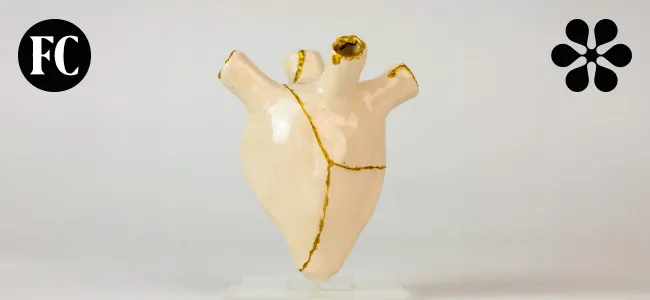

Life is confusion
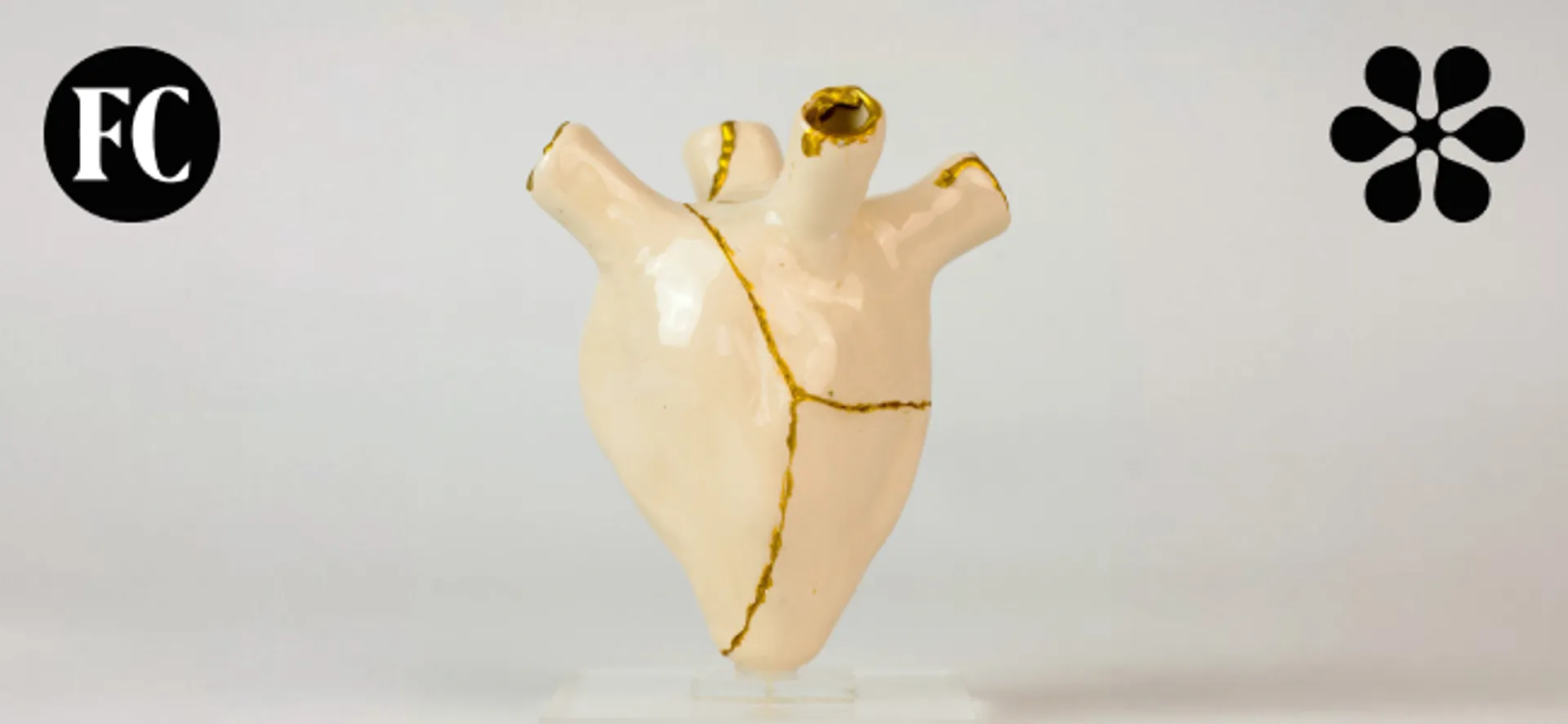
Precarious, temporary, perishable;
Fallible, transitory, transitive;
Ephemeral, fleeting, and short-lived;
Here is a living being, here is a living being.
Impure, imperfect, impermanent;
Uncertain, incomplete, inconsistent;
Unstable, variable, defective;
Here is a living being, here is one.
Listening to this song by Lenine with my eyes closed on a flight to São Paulo, I found myself in tears when I realized what it was about. He uses a sequence of over 20 adjectives with supposedly negative connotations, like imperfect or fallible, to simply describe the most original manifestation of the entire universe: life, or rather “the living.” That which exists from the sophisticated biochemical alchemy of the cosmos and manifests in body and soul here.
Yes. If we are alive, we are indeed inconsistent and unstable and never satisfied. Amid the piano solo by Amaro Freitas at the end of the song, which seems to give color and shape to the explosion of life, many revelations fell into place. First, poetry and art are always shortcuts for us to understand and feel what is most important. And then, how we have been unfair to ourselves, demanding perfection, eternity, balance, and completeness from mere living beings that we are. An absolute incompatibility with our own nature.
In my recent lecture at the Web Summit, I emphasized the value of error, chance, and imperfection as essential for generating the new, both in the field of technology and innovation, but also in the evolution of life itself. According to Darwin, from Archaea, the symbolic first form of life we know of, to sapiens (we continue with the habit of considering ourselves the pinnacle of existence), the only thing we can guarantee is that if it were not for the stumbles in genetic copies, we would still be stuck in the gaseous pools of a primitive planet. We are pure accident.
And why the hell did we decide that we have to be exactly everything we are not? This crazy dictatorship of performance, productivity, and infallibility seems to be the major reason for the collective illness we experience today. From the artificial happiness of Instagram to the filters of TikTok, from bizarre facial fillers to protein cocktails promising eternally toned muscles, we have created a dangerous trap for ourselves. The unattainable perfection.
The result? A sick society, with new generations that are fragile and unhappy, epidemics of loneliness, and mental health becoming the topic of every agenda. Cause and consequence aligning towards gloomy futures.
How can we create positive futures if we are too ill to imagine them? What will have to happen for us to face reality and break this vicious cycle? For starters, perhaps we should dismantle the idea that mental health exists. It seems to be just another fiction we pursue. As if discomfort, suffering, and imbalances should not occur. Normal life, as Lenine reminds us, is full of this. The pursuit of an unattainable state of health becomes the reason for illness. Enough with Rivotril.
And the worst part seems that things are going to get even more complicated. If social networks are already this steroid of the ego with a small dose of AI embedded, with the launch of the new generations of Llama and Gemini announced by Meta and Google, the hypnotic power of screens will only worsen. A curious fact was recently revealed that young Americans between 10 and 19 years old are 50% less likely to have bone fractures than previous generations. They expose themselves less to real risks like biking, skateboarding, or playing soccer. They spend an average of five to nine hours a day in front of screens. As a result, fractures are no longer of legs and arms, but psychological.
To complete the bad news, this generation is the first in history to have a lower IQ than their parents. In the book “Screen Damage: The Dangers of Digital Media for Children,” by French Ph.D. in neuroscience, Michel Desmurget, highlights the negative impacts on cognition due to excessive screen use and, above all, the impairment of social and emotional skills. A generation with low resilience, because it is increasingly distant from the ancestral strategies of evolution to create resistance for an individual. Fall and get up, err to correct, break the face to evolve. If we account for the outsourcing of our intuition to algorithms like Waze or Tinder, and even more recently our imagination being delegated to generative AIs, also a theme of my lecture at the Web Summit, what will be left of the human?
It seems that China is handling this. Besides TikTok not existing there, the government has enacted a law that limits video game use for individuals under 18 to three hours a week, and only between Friday and Sunday. In a dictatorship, it seems easy. Here, I see my friends, parents of young teens, grappling with increasingly complex daily dilemmas. Having the courage to fight the battle of not giving a 10-year-old a cellphone, even though all their school friends already have one, or finding a way to limit screen time for teenagers without them freaking out and threatening to harm themselves, has proven to be a nightmare. Glad I’m past that stage!
The antidote to all this? According to Gilberto Gil: Life is pain and confusion, Life is sound and passion, Life is love.
I return to this article with lessons learned from SXSW about social intelligence. There’s no way around it. We’ll have to invest in love, in relationships, in close encounters, in hugs. We’ll have to read more to our young children, invite them to irresistible activities like camping near waterfalls, climbing trees to eat fruit right from the branch, riding horses. For teenagers, opening up spaces for them to socialize in the real world, such as learning to play musical instruments, is hard to imagine a better opportunity to exercise social intelligence than forming a band. As always, it seems the challenge is creative.
I think about how brands could be allies in this very important project of social regeneration. How, from their positions of power, without demanding an expansion of CEOs’ level of consciousness but rather an instinct to maintain relevance, they could offer products and services that truly stimulate social intelligence, helping to dismantle prejudices, unattainable standards, and sick routines? What could Patagonia or Nike offer as stimuli for children and youths to drop video games in favor of outdoor sports? How could Lego or Mattel come together to think about irresistible analog toys? How could Apple leverage all its design and UX expertise to encourage young people to venture collectively in a healthy way? Or even, why not, how could the (anti) social networks that created much of the problem take on the challenge of reinventing themselves for the good of humanity and a more dignified place for their brands in history?
Let’s get to work, everyone?
Listen to the song Vivo by Lenine here.
Heading 1
Heading 2
Heading 3
Heading 4
Heading 5
Heading 6
Lorem ipsum dolor sit amet, consectetur adipiscing elit, sed do eiusmod tempor incididunt ut labore et dolore magna aliqua. Ut enim ad minim veniam, quis nostrud exercitation ullamco laboris nisi ut aliquip ex ea commodo consequat. Duis aute irure dolor in reprehenderit in voluptate velit esse cillum dolore eu fugiat nulla pariatur.
Block quote
Ordered list
- Item 1
- Item 2
- Item 3
Unordered list
- Item A
- Item B
- Item C
Bold text
Emphasis
Superscript
Subscript
Text:
Fred Gelli
Communication & Mkt & Brand Tátil:
Luiza Magalhães, Marcelo Cândido and Natália Silveira
Consulting:
Flávia Nakamura