
The Flying Tent and the Teacher of Teachers
You can only truly contribute something meaningful to any environment or group of people if you’re learning from them.”
It all started with a ketchup packet. The year was 1986. I had just switched to the Design program at PUC Rio after realizing that my dream of becoming a naval engineer and designing sailboats wasn’t meant to be (it took me three weeks to “chicken out” over Leithold’s 600-page calculus book written in an alien language). I was in the second semester of industrial design and needed to choose a theme for my next project.
That afternoon, at the IAG cafeteria while eating a slice of pizza, I found myself locked in battle with a ketchup packet (yes, cariocas commit the heresy of putting ketchup on pizza!), and, of course, it won! Covered in red, I remembered a traumatic experience from a few days prior, when I struggled to open a foil seal on a syrup bottle. Done. My theme was chosen. I’d do a project on smarter packaging.
In the next class, I presented my idea to Ana Branco, now my eternal guru, friend, and mentor, but back then just an unusually eccentric professor in her “classroom” — a tent on a dirt floor with a bonfire inside. She thought my theme could make an interesting project and asked me to bring some reference packaging that I thought was well-designed for the following class.
Still new to it all, trying to make sense of the contrast between that hippie setting with this professor who was part witch, part fairy, and everything I had imagined a classroom for learning to design stylish chairs and lamps — like the ones in Italian design books — should be, I brought a few imported cookie packages my mother used to buy, with little drawers that struck me as the peak of usability. Oh, how wrong I was! Ana took my cherished references, examined them, laughed, and tossed them into the fire! “Kid, are you crazy? You want to start learning what it means to be a designer with these mediocre references? Have you thought about the packaging that brought you into this world?”
She was referring to my mother’s womb as the ultimate packaging — it protects when needed, nourishes, and cradles the contents, and at just the right time, invites them to lead an independent life. At that moment, I had an epiphany that would forever shape my life as a creative and professional. I realized I could look to nature as an endless source of inspiration for design solutions.
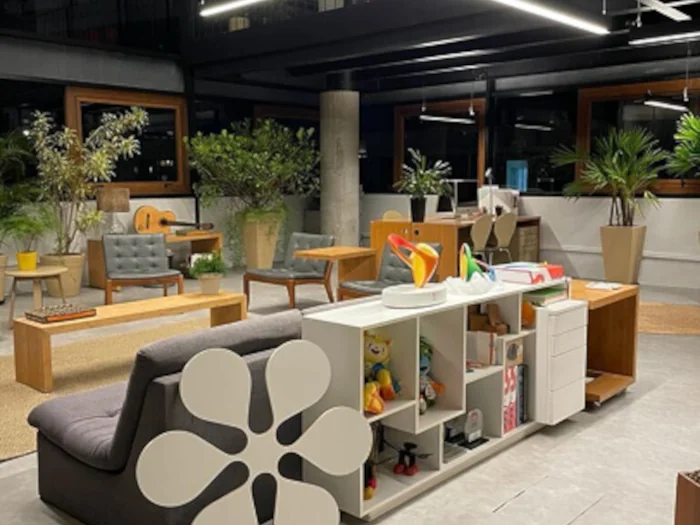
That same day, I ate a banana and compared how much more user-friendly it was compared to that infamous ketchup packet. I was discovering “bionics” — what we now call “biomimicry” — which would define my professional journey, become the foundation for most of my creative reflections, and plant the original seed for Tátil, the design office now celebrating its 35th anniversary, which was born a year later in that very tent, nourished by the revolutionary provocations of this incredible woman I’m honoring today.
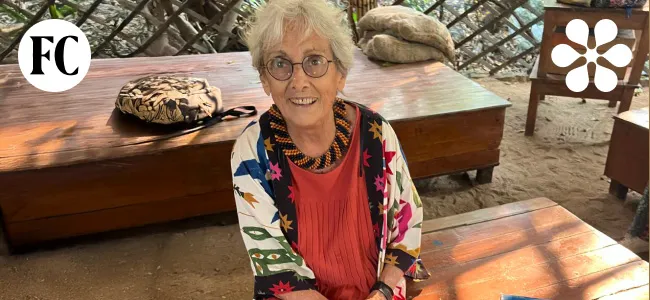
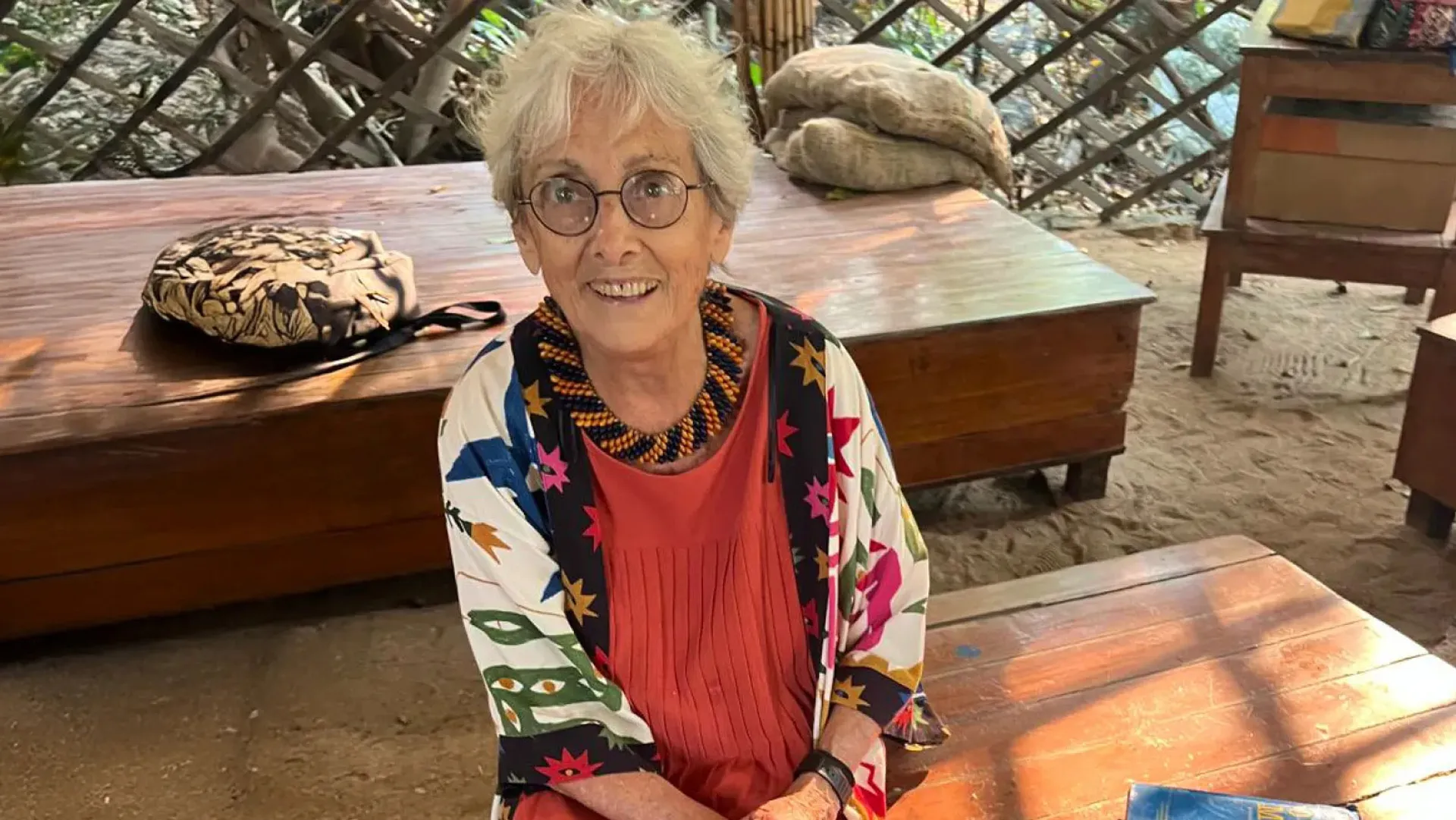
Ana Branco, now freshly 80 and still active at PUC, was much more than a teacher to me and her thousands of students over more than 40 years. She helped us understand who we truly were, our true nature, and our power place of strength. In a recent tribute class on campus that I and numerous alumni from various eras organized, it was easy to see in every testimonial how much this was her real purpose.
In our stories, it became clear that beyond teaching us methodologies or techniques to become good designers, Ana provoked us — through her “methodological tricks” — to dive into diverse spaces such as schools, hospitals, gyms, or any place where we could interact deeply with people passionate about their work. They were the “intercessors” — teachers, doctors, therapists, or other professionals driven by goals of transforming realities, with whom we would ally to, first and foremost, learn, and if all went well, contribute with ideas and design solutions that made a difference.
Ana always believed that only through real coexistence could we capture the creative potential in every space, constantly working to amplify what already existed in abundance rather than focusing on lack. She insisted that true learning lies far more in the journey than in the results. In these intense journeys, full of dedication, missteps, challenges, smiles, and tears, we had the opportunity to encounter our limitations, strengths, and weaknesses, our true character — a great existential laboratory where the project was merely an excuse to advance in understanding what moves us, how we see the world, what we believe in, and what makes our eyes light up. True self-discovery.
Ana taught us design thinking long before the methodology was popularized by Stanford and IDEO — designing *with* and not *for* someone, prototyping and experimenting constantly, with absolute empathy for the people who truly understand the subject you’re interested in. Listening more than speaking, never approaching with the arrogance of assuming you know what the other needs or that you are the “magical solver” of someone’s problems. You can only genuinely contribute something relevant to any environment or group if you’re learning with them, if the exchanges are authentic in a trusting, collaborative environment.
Ana always said that the perfect “clients” for a designer’s growth are children. They have no qualms about telling you they don’t like what you’ve proposed, and only then can you understand what truly resonates. Clients who handle feedback too delicately only compromise the evolution of ideas.
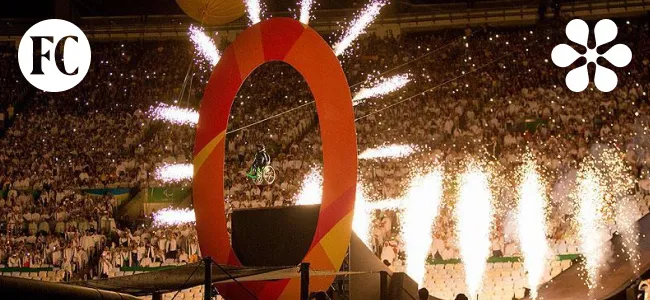
I gradually came to understand what this meant during the four projects I completed with Ana. One of them was with deaf children at the National Institute for the Education of the Deaf — INES, where I spent over a year learning with them about multisensory experiences. It was undoubtedly a vital influence on the work we did in the identity for the Rio Paralympic Games and the opening and closing ceremonies I co-directed with Vik Muniz and Marcelo Rubens Paiva.
It’s been over 38 years since that blessed ketchup packet that changed my life. In that tent, I understood and felt who Fred was, what truly interested me. It was there that I learned to look at the world differently, keeping alive the childlike perspective I’d shared with so many projects. It was in that tent that I met some of my lifelong friends. It was there that I learned the designer’s true role — to connect ideas, knowledge, and people. It was there I understood that results are always proportional to involvement. There’s no shortcut: if you want something special to happen in your life, you must invest your best energy with consistency and intensity. I passed that on to the more than 600 students I taught over nearly 20 years in the same design course where I graduated. I passed it on to my daughters, who were also Ana’s students in the tent.
On November 6th, during the week celebrating the 30th anniversary of PUC’s design graduate program, we’ll launch the documentary *Flying Tent*, showcasing a bit of what I’m sharing here with you. It’s a tribute to Ana Branco’s profoundly revolutionary perspective that she continues to offer her students so that more people can experience it.
Directed by Fernanda Heinz, the same director behind the incredible Biocentricos, the documentary seeks to capture a bit of the strength, delicacy, and original poetry of the “teacher of teachers” and her extraordinary capacity to shape individuals who, through passion and creativity, continue to believe that changing the world is possible!
Heading 1
Heading 2
Heading 3
Heading 4
Heading 5
Heading 6
Lorem ipsum dolor sit amet, consectetur adipiscing elit, sed do eiusmod tempor incididunt ut labore et dolore magna aliqua. Ut enim ad minim veniam, quis nostrud exercitation ullamco laboris nisi ut aliquip ex ea commodo consequat. Duis aute irure dolor in reprehenderit in voluptate velit esse cillum dolore eu fugiat nulla pariatur.
Block quote
Ordered list
- Item 1
- Item 2
- Item 3
Unordered list
- Item A
- Item B
- Item C
Bold text
Emphasis
Superscript
Subscript
Text:
Fred Gelli
Communication & Mkt & Brand Tátil:
Luiza Magalhães, Marcelo Cândido and Natália Silveira
Consulting:
Flávia Nakamura